Available on iOS and Android / Interface preview
Progressive overload
Progression targets
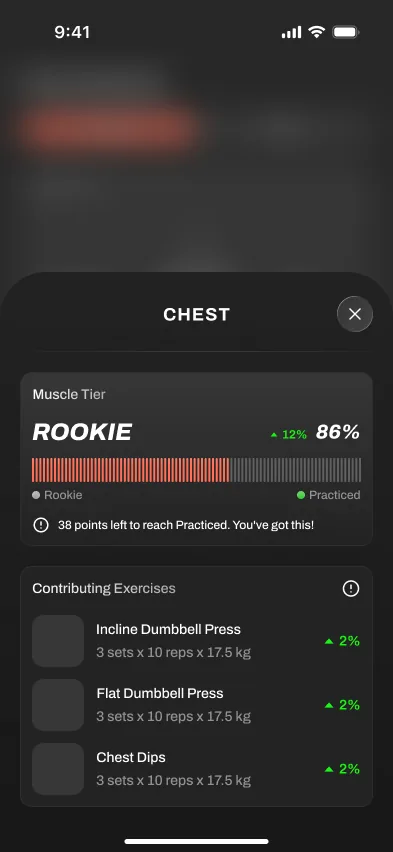
Keep your next targets alongside the reps and loads you completed. Handler is available on iOS and Android; Pro is required after onboarding.
Short answer
Updated September 22, 2026
Review what you lifted before deciding what comes next. Handler brings progression targets from completed training together with your log, history, and coach chat. Targets are guidance, not a guarantee of automatic plan changes, recovery, or results.
We judge the workflow by what happens during real training: starting the session, logging cleanly, keeping momentum between sets, and turning workout history into a useful next step. Product screens shown here come from private testing and do not represent a public store release.
The workflow
How to review progression
- 01
Log your sets
Record weight, reps, and effort during your workout.
- 02
Compare sessions
Use history and progress review to compare your logged training.
- 03
Review the next target
Review progression targets alongside what you actually completed.
- 04
Back off when needed
Use contextual chat to discuss training questions. A proposed target is not a requirement to increase your load.
Why it matters
Progression tools in one place
Progress you can see
Review recorded training with history and progress tools.
Effort logging
Record effort alongside reps and weight for later review.
Contextual discussion
Bring questions about training and missed targets to coach chat; this is not a validated recovery assessment.
History to review
Use recorded sessions to review what you completed over time.
Workflow comparison
Spreadsheet or in-app targets
A spreadsheet gives you control over formulas, targets, and review. Handler keeps suggested targets beside your logged training and coach chat. The practical difference is how you organize the work, not a promise of better results.
Doing it manually
- Set targets with your program's rules or formulas
- Record reps, loads, and effort in your own layout
- Review adjustments using your program or coach
- Build the charts and summaries you want
Handler test build
- Progression targets from completed training
- Logged reps, loads, and effort to review
- Contextual chat for training questions
- History and progress review in the app
Where it helps
Before, during, and after training
The point is not to add another screen to manage. The feature should make the workout easier to start, faster to log, and clearer to review once the session is over.
Before training, it should remove uncertainty about what to do or which load to use. During the workout, it should stay quiet and fast enough for real rest periods. Afterward, it should turn the session into a useful next action instead of leaving the history to interpret manually.
The practical test is whether the feature still saves time, clarifies decisions, or prevents missed data after ten sessions. If it only looks impressive in onboarding, it is decoration.
Evaluation standard
Reviewed around real gym use
Platform support, watch behavior, offline sync, and pricing should be rechecked from first-party pages at publish time. Private-test behavior may change before release.
Workout-floor speed
Logging, checking targets, and moving to the next set should get faster, not create a second screen to manage.
Progression clarity
The feature should explain the next action: add load, hold steady, swap an exercise, rest longer, or adjust the week.
Reliability
Phone, watch, offline, and sync behavior need to hold up under short rest periods and weak gym signal.
Frequently asked questions
What progression model does Handler use?
How does it handle deloads?
Can I still control my own loads?
Does this work for hypertrophy as well as strength?
Available on iOS and Android
Put your next workout in Handler.
Build a strength plan, log your sets and review your next targets with contextual coach chat. Handler Pro is required after onboarding; subscription terms are shown before purchase.